
Termite Treatment
The Importance of Evaluating Termite Activity in Trees
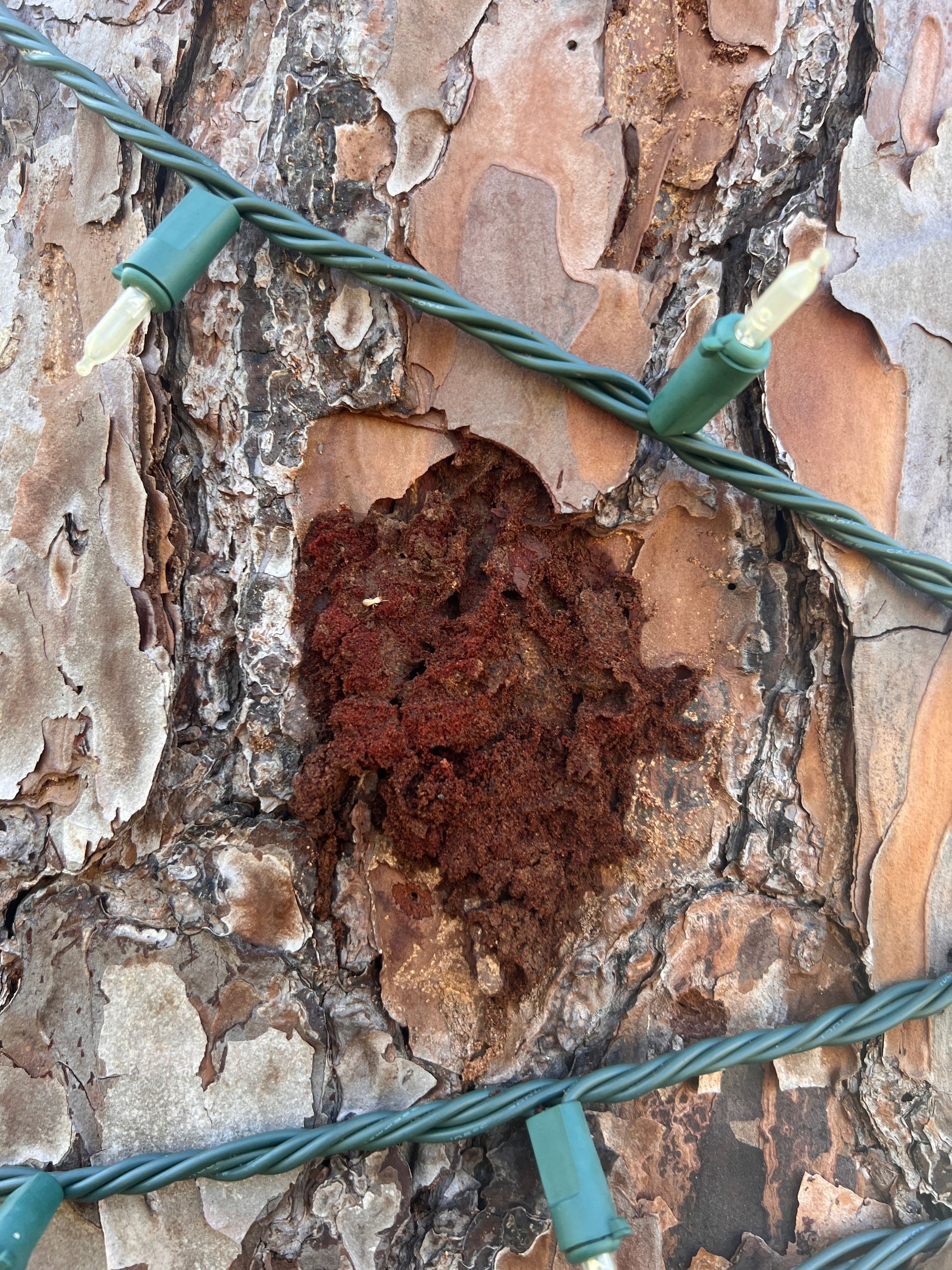
When termites are found in or around a tree, the issue is not always limited to the insect itself. In many cases, termite activity is associated with existing cavities, dead wood, internal decay, or structural deterioration that needs to be evaluated in a broader tree-care context.
Our termite treatment service is built around arborist-led inspection, structural awareness, and condition-based recommendations. We assess the tree, the visible signs of termite activity, the extent of any trunk deterioration, and whether the tree is still a reasonable candidate for preservation.
What Does Termite Activity in a Tree Mean?
Termites are often associated with compromised wood rather than healthy, fully functional wood. Their presence may indicate that the tree has pre-existing decay, hollowing, dead tissue, or internal deterioration that deserves closer inspection.
That is why proper evaluation matters. The goal is not simply to react to the insect. The goal is to understand what termite activity means for the health, stability, and management of the tree.
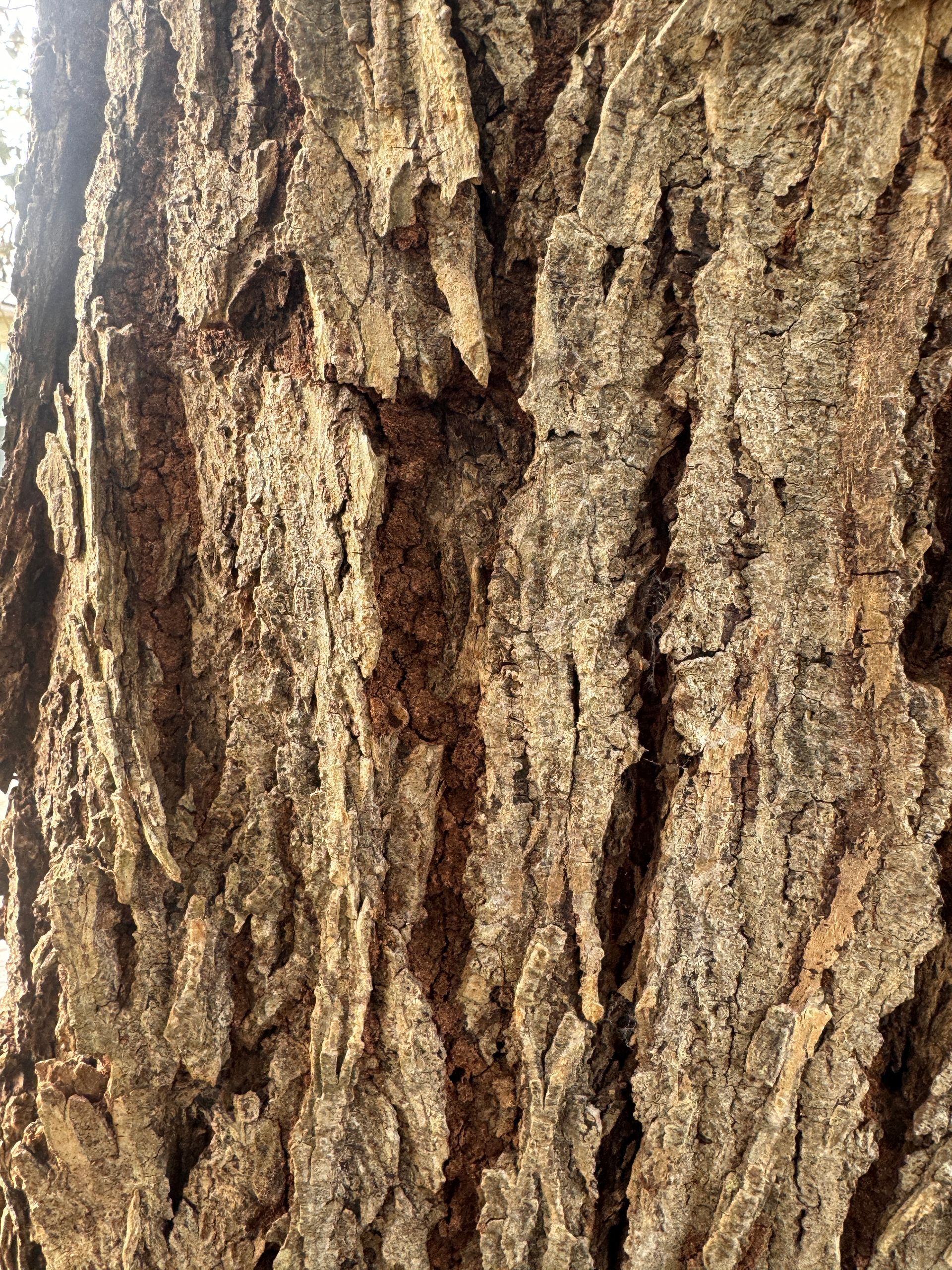
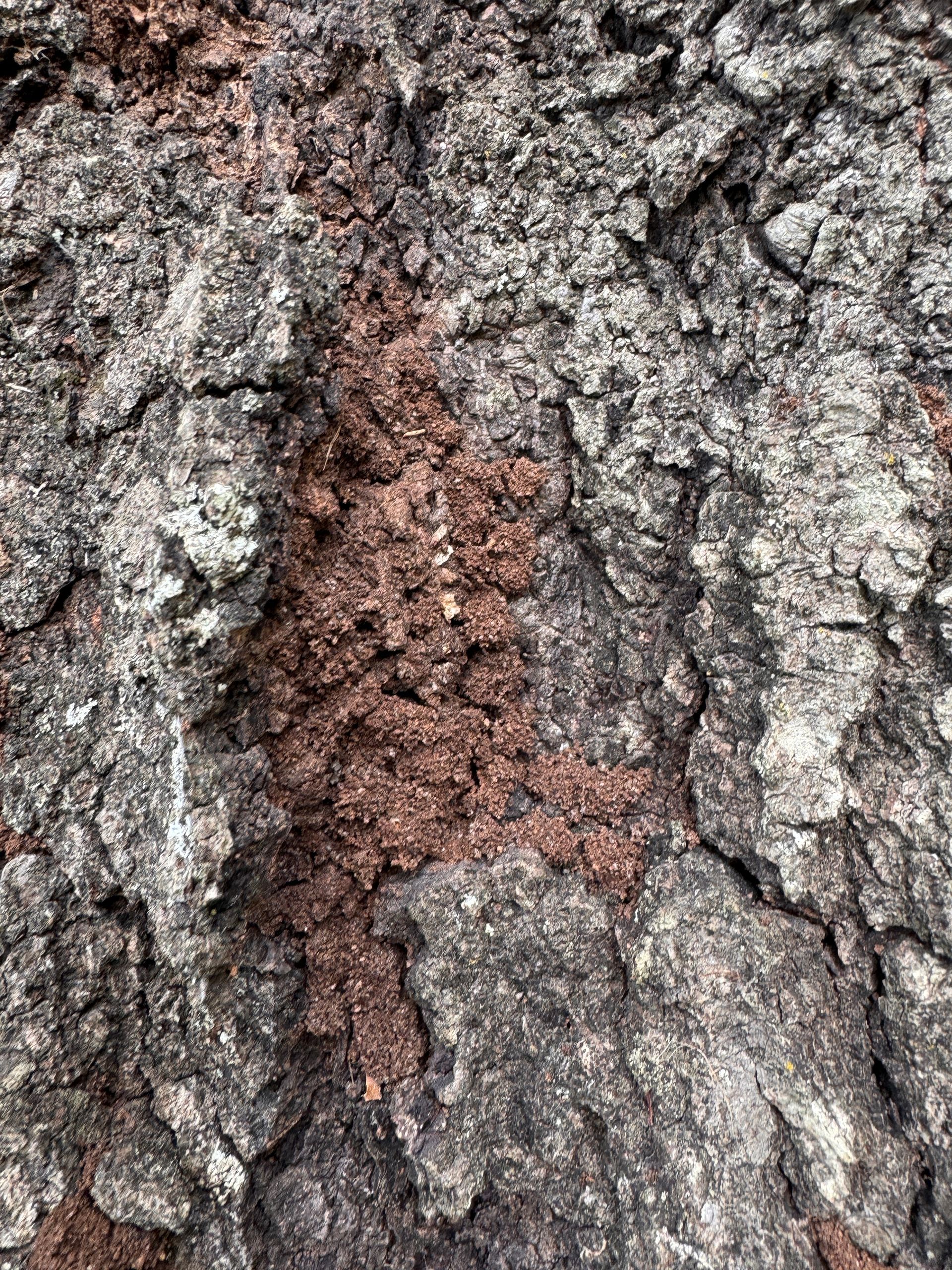
Signs Your Tree May Have Termite Activity
Common warning signs include:
- Mud tubes or shelter tubes on the trunk
- Hollow-sounding wood
- Visible cavities or openings in the trunk
- Dead or missing bark
- Wood deterioration near the base of the tree
- Insect activity around the trunk flare
- Tree decline associated with visible structural defects
Why Fast Evaluation Matters
Termite activity can sometimes be a symptom of a deeper structural problem. If a tree already has decay, hollowing, or significant wood loss, delaying evaluation may allow risk conditions to worsen, especially if the tree is near a home, driveway, sidewalk, or other target area.
Not every termite-affected tree needs to be removed, but not every tree is a good treatment candidate either. Early evaluation helps determine the right path forward.
Our Termite Treatment Process
1 - Arborist Inspection and Diagnosis
We begin with a focused inspection of the trunk, root flare, bark condition, cavity presence, and surrounding site conditions. We look for visible termite evidence and evaluate the tree in the context of its structural condition.
2 - Condition and Viability Assessment
Not every tree with termite activity is a good candidate for preservation. We determine whether the tree still has enough sound structure, canopy value, and overall vitality to justify treatment and monitoring.
3 - Targeted Treatment Plan
If treatment is appropriate, recommendations are based on the tree’s condition, the extent of termite activity, and the surrounding site use.
4 - Follow-Up Monitoring
Trees with termite-related concerns often need ongoing observation. Follow-up helps determine whether activity is continuing, whether structural conditions are changing, and whether the management plan needs to be adjusted.
A Typical Treatment Plan May Include:
- Arborist inspection of termite evidence and trunk condition
- Evaluation of cavities, hollow areas, and structural concerns
- Condition-based treatment recommendations where appropriate
- Monitoring for continued activity or advancing deterioration
- Removal recommendations if preservation is no longer realistic
Why Hire A Certified Arborist For Termite Problems
Termite activity in trees should not be treated like a simple household pest problem. In many cases, the real issue is the relationship between the insects, internal wood deterioration, and the tree’s remaining structural integrity. A certified arborist can determine whether the concern is limited, whether the tree is still worth preserving, and whether treatment, monitoring, or removal is the most responsible recommendation.
Schedule a Termite Treatment
If you are seeing mud tubes, hollow areas, dead bark, cavities, or unexplained trunk deterioration, schedule a termite evaluation with a certified arborist and get a recommendation based on tree condition, structural context, and long-term management.
Common Questions About Termites in Trees
Does termite activity always mean the tree is failing?
No. Termite activity has to be evaluated in context. Some trees remain manageable, while others have deeper structural problems that affect preservation potential.
Can a tree with termites still be saved?
Sometimes, yes. That depends on how much sound wood remains, how advanced the deterioration is, and whether the tree still has meaningful canopy and landscape value.
Are termites the main problem, or is decay the bigger issue?
Sometimes both are involved. In many cases, termite activity is associated with already compromised wood, which is why professional evaluation matters.
Is one inspection enough?
Not always. Some trees need follow-up monitoring to determine whether activity continues or whether structural conditions are changing.